A beginner BJD faceup kit does not need to be large. Start with a verified sealant system, a small selection of compatible watercolor pencils, dry chalk pastels and water-based acrylic paint, a few detail brushes, correction tools, and a safe workspace. Compatibility and control matter more than owning every color or specialty tool.
Planning and reference supplies
- A clear photo or drawing reference for brows, lashes, lips, and color placement
- A simple face chart or digital sketch for testing the expression
- Neutral lighting and a phone or camera for progress photos
- A notebook for materials, layer order, and drying observations
BJD faceup materials for color and linework
Common BJD faceup materials include compatible watercolor pencils for controlled lines, dry chalk pastels for soft blush and shadow, and selected water-based acrylic paint for fine opaque details. Do not use oil pastels as a substitute for dry chalk pastel, and do not assume that a product is resin-safe simply because it is sold as an art material.
Test the complete stack—resin, sealant, pencil, pastel, acrylic, gloss, and adhesive—on a head cap or comparable resin sample. A white mixing surface helps reveal color strength before pigment touches the doll.
BJD faceup tools: detail brushes, pencils, and correction tools
- One or two fine pointed brushes that return to a sharp tip for lashes, brows, and lip lines
- A soft small brush reserved for dry pastel placement and blending
- A reliable sharpener that keeps watercolor-pencil points controlled
- A kneaded eraser or another tested correction tool for lifting light marks before sealing
- Cotton swabs, lint-free applicators, and clean water containers dedicated to doll work
Build a small kit around the mark you want to make
Start with a job for each tool instead of a large shopping list. The tools shown in the preview are an example of a working table, not a brand recommendation or a claim that every visible material will suit your doll.
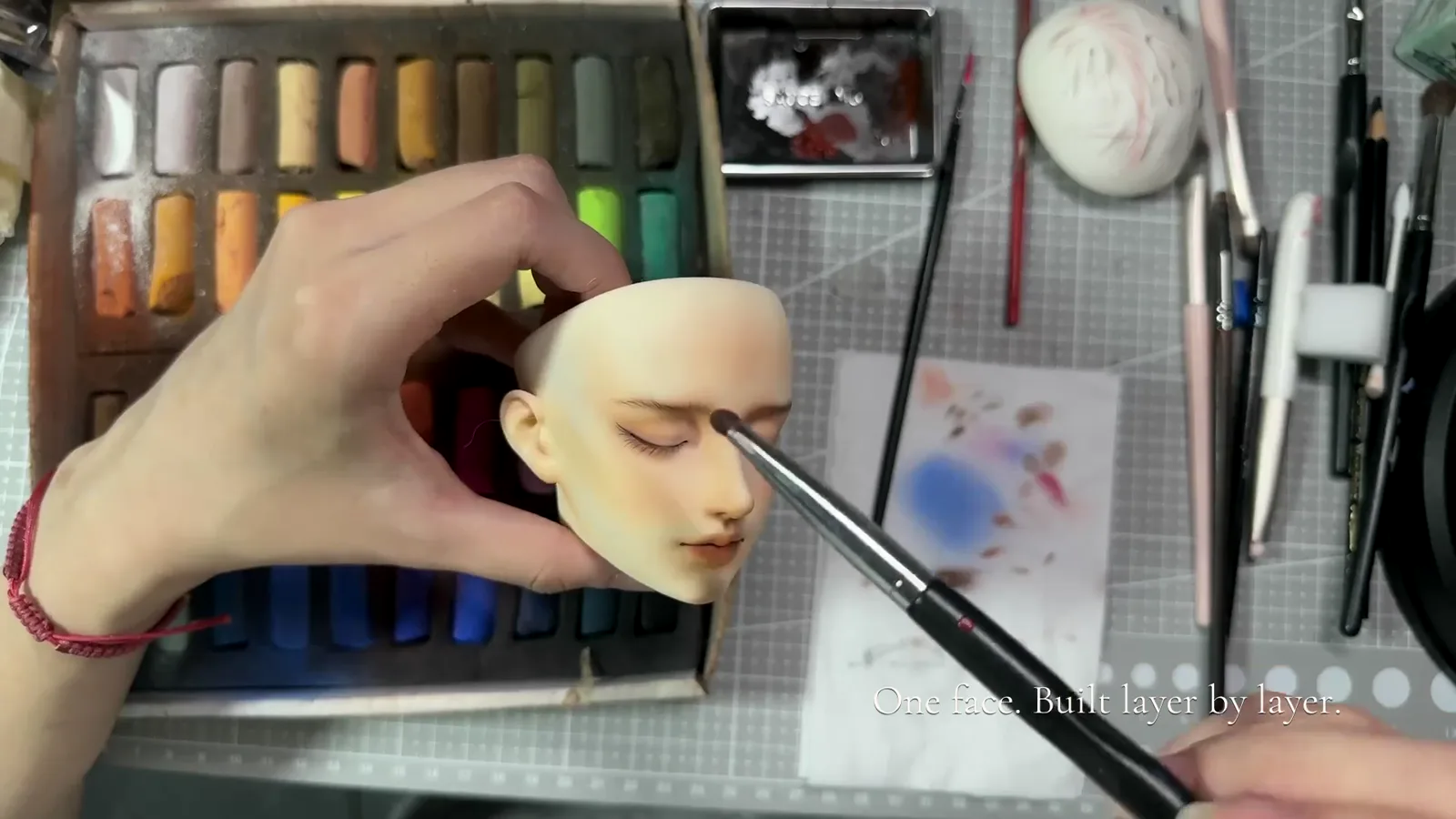
| Job | Start with | Check before use |
|---|---|---|
| Soft blush and shadow | A dedicated soft brush and a small selection of compatible dry color | Does a light pass give controllable color on the tested surface? |
| Brows, lashes and lip lines | A pointed detail brush or compatible sharpened watercolor pencil | Can you make a tapered line without a split brush tip or excessive pressure? |
| Small corrections | A clean, tested correction tool and spare applicators | Does the method lift the mark without changing the protected layer underneath? |
| Surface and safety setup | The specified sealant system, clean support and product-required protection | Are the label, safety instructions and full material-stack test available? |
| Optional equipment | Extra colors, duplicate brushes or an airbrush when a project calls for them | Is there a specific effect you cannot practice with the current kit? |
Workspace and handling tools
- Lint-free work surface and clean containers
- Soft dust-removal tools reserved for doll work
- Gloves or handling protection when required by the product instructions
- Stable head support that does not scrape the resin
- Dedicated brushes and applicators that are not shared with cosmetics or food use
Starter kit essentials versus optional tools
A practical starter kit prioritizes compatible color materials, a tested sealant, a few controlled brushes, correction tools, and required safety equipment. An airbrush, large pigment collection, specialty effects, and duplicate brushes can wait until a specific project needs them.
Skip strong solvents, permanent markers, human makeup, nail products, oil-based color products, and unverified sprays. Buying fewer compatible products makes troubleshooting easier because each layer and material can be identified.
Frequently asked questions
Questions about bjd faceup supplies
What should be in a beginner BJD faceup kit?
Start with a compatible sealant system, a small set of watercolor pencils, dry chalk pastels, selected water-based acrylic paint, fine detail and pastel brushes, tested correction tools, clean handling supplies, and the ventilation and protective equipment required by each product.
What brushes are best for a BJD faceup?
Choose a small number of artist brushes that hold their shape: a fine pointed brush for controlled lines and a soft brush for pastel placement are more useful than a large inexpensive set. Keep them dedicated to doll work and replace any brush that sheds or loses its point.
Do I need an airbrush for my first BJD faceup?
No. An airbrush can support specific effects, but beginners can learn planning, soft color placement, and fine line control without adding that equipment immediately.
Can I use ordinary makeup on a BJD?
Do not assume human cosmetics are compatible with resin. Oils, dyes, binders, and additives may stain or interact with the surface. Use materials verified for the chosen doll-art workflow.